

Play Based Learning Activities for Toddlers integrates cognitive development, motor coordination, language acquisition, and emotional regulation through structured yet flexible exploration. Modern early education research consistently shows that young children learn fastest when interacting with their environment rather than receiving passive instruction. Purposeful play strengthens neural connections responsible for problem solving, memory, and social competence while preserving intrinsic motivation.
How Play Builds the Toddler Brain
During toddlerhood, the brain forms over one million neural connections per second. Experiences determine which connections strengthen and which fade.
The Harvard Center on the Developing Child explains how active engagement wires executive function and learning capacity through repeated sensory and social input.
Play triggers:
- Curiosity-driven exploration
- Cause-and-effect reasoning
- Emotional expression
- Motor planning
These processes activate multiple brain regions simultaneously, producing durable learning.
Sensory Input and Neural Growth
Touching textures, hearing language, and moving through space all build neural architecture. Sensory-rich play accelerates comprehension far beyond worksheet-style tasks.
Research summarized by the American Academy of Pediatrics on learning through play confirms play as foundational for cognitive development.
Autonomy and Motivation
When toddlers choose activities, dopamine-driven reward pathways reinforce focus and persistence. This internal motivation forms the basis of lifelong learning habits.
Play Based Learning Activities for Toddlers
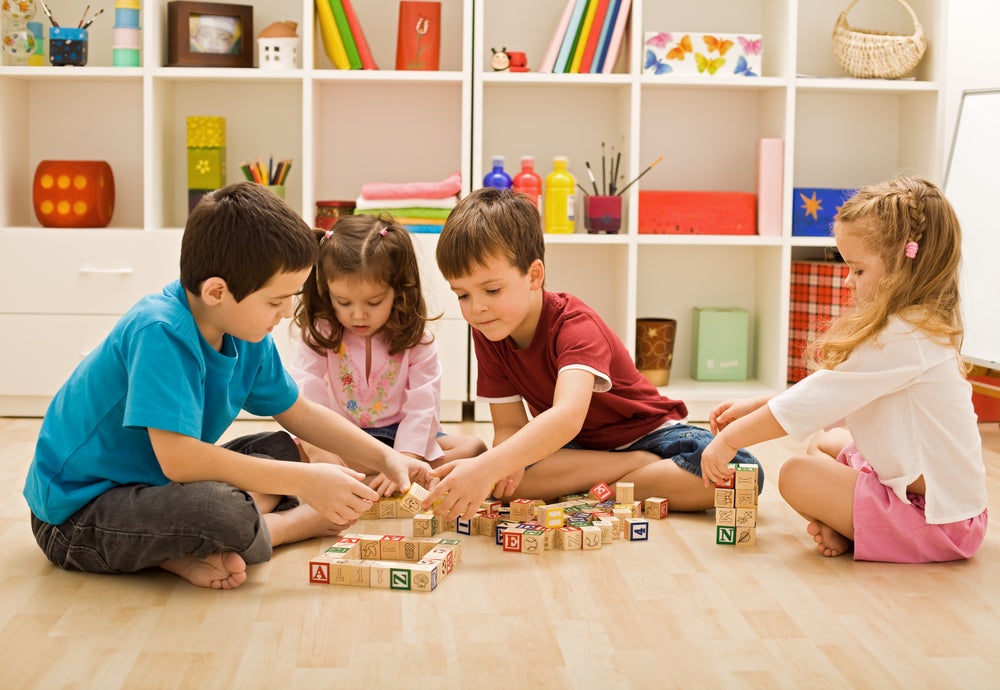
This educational framework blends freedom with intentional skill exposure.
Structured Versus Free Play Balance
Both forms matter.
Free play builds creativity and self-regulation.
Structured play introduces targeted learning goals.
Examples:
- Sorting games for categorization
- Pretend cooking for language and sequencing
- Building blocks for spatial reasoning
The National Association for the Education of Young Children play standards recommend daily combinations of both.
Learning Domains Activated Through Play
| Domain | Play Example | Skill Developed |
|---|---|---|
| Cognitive | Puzzle fitting | Problem solving |
| Language | Pretend phone | Vocabulary |
| Motor | Climbing | Coordination |
| Social | Turn taking games | Cooperation |
| Emotional | Role play | Empathy |
Play functions as a multi-skill learning engine.
Environment Setup for Maximum Learning
Design spaces that invite exploration:
- Low shelves
- Open-ended toys
- Rotating materials
Limit electronic toys that reduce imagination.
The Play Based Learning Montessori prepared environment concept supports independence through accessible materials.
Language Development Through Everyday Play
Talking During Play
Narrate actions:
“You stacked the red block on top.”
This reinforces word-object connections.
The CDC language milestone guide links frequent verbal interaction to faster vocabulary growth.
Songs and Rhymes
Music improves memory and phonetic awareness.
Clapping rhythms enhances auditory processing.
Story Play
Act out stories using toys.
This builds sequencing, comprehension, and imagination.
Motor Skills and Physical Intelligence
Gross Motor Play
Activities:
- Running
- Jumping
- Climbing
- Ball rolling
These strengthen muscles and balance.
The World Health Organization movement recommendations for young children emphasize daily active play for healthy development.
Fine Motor Play
Activities:
- Bead threading
- Play dough shaping
- Sticker peeling
- Crayon scribbling
These prepare hands for writing.
Sensory Bins
Fill containers with rice, sand, water beads, or beans.
Add cups and spoons.
This builds tactile discrimination and concentration.
Cognitive Skills Through Simple Games
Sorting and Matching
Use:
- Color blocks
- Shape cards
- Household objects
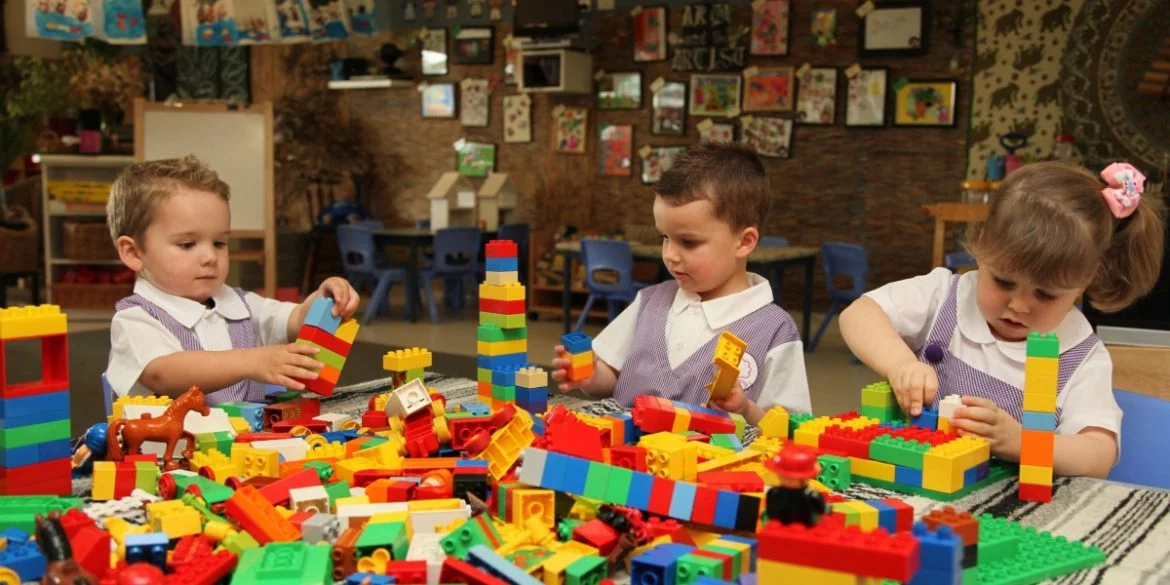
Sorting teaches classification and early math logic.
Cause and Effect Toys
Pop-up toys, ramps, and rolling balls demonstrate physical principles.
This builds predictive reasoning.
Problem Solving Challenges
Stack cups.
Fit shapes.
Build towers.
Allow frustration moments for resilience development.
Social and Emotional Learning in Play
Pretend Play
Role-playing family, store, or doctor scenarios builds empathy and perspective-taking.
The Zero to Three social development resource highlights pretend play as central to emotional growth.
Turn Taking
Simple board games or rolling balls back and forth teach patience and cooperation.
Emotion Naming During Play
Label characters’ feelings:
“The doll is sad.”
This develops emotional literacy.
Outdoor Learning as a Development Multiplier
Nature Exploration
Collect leaves, rocks, sticks.
Compare sizes and textures.
This builds observational skills.
The Children and Nature Network research connects outdoor play to improved focus and emotional regulation.
Water Play
Pouring, floating, and splashing teach volume and physics.
Gardening
Planting seeds shows life cycles and responsibility.
Creating a Daily Play Based Learning Rhythm
Morning:
- Active movement play
- Sensory exploration
Midday:
- Language-rich pretend play
- Fine motor activities
Afternoon:
- Outdoor exploration
- Problem-solving games
Evening:
- Calm storytelling play
- Music and rhythm
Routine builds security and engagement.
Common Barriers for Play Based Learning
Over-Structuring
Too many instructions reduce creativity.
Leave space for imagination.
Screen Overuse
Passive consumption limits neural activation.
The American Academy of Pediatrics screen time guidance recommends prioritizing interactive play over digital content.
Adult Control
Correcting play outcomes reduces confidence.
Allow experimentation.
Measuring Play Based Learning Without Worksheets
Indicators of progress:
- Increased vocabulary
- Longer attention span
- Improved coordination
- Creative storytelling
- Emotional expression
These reflect real developmental growth.
Long-Term Academic Impact
Children exposed to rich play environments show:
- Better problem-solving
- Higher literacy readiness
- Stronger executive function
Longitudinal research referenced by the National Institutes of Health early learning outcomes links play-based early experiences to improved school performance.
Play builds learning capacity itself, not just knowledge.
Sample Weekly Play Based Learning Themes
Theme: Colors
- Sorting colored blocks
- Painting with sponges
- Matching toys
Theme: Animals
- Toy animal habitats
- Animal sound games
- Picture books
Theme: Transportation
- Rolling cars down ramps
- Pretend bus rides
- Drawing roads
Theme: Food
- Toy kitchen cooking
- Sorting fruits
- Taste exploration
Theme: Nature
- Leaf collecting
- Rock painting
- Cloud watching
Themes structure variety without rigidity.
Core Principles for Effective Play Learning
- Follow child interest
- Keep activities simple
- Encourage exploration
- Talk constantly
- Avoid perfection
Learning emerges from engagement.
Final Integration
Play based education aligns with brain development, emotional growth, and intrinsic motivation. It replaces passive instruction with multisensory experience, building foundational skills across cognitive, social, and physical domains simultaneously. Toddlers who learn through play develop stronger executive function, curiosity, and adaptability — the core competencies required for lifelong learning success.
Play Based Learning Activities for Toddlers represents not a trend but a biologically grounded learning strategy supported by neuroscience, pediatric research, and educational psychology.