
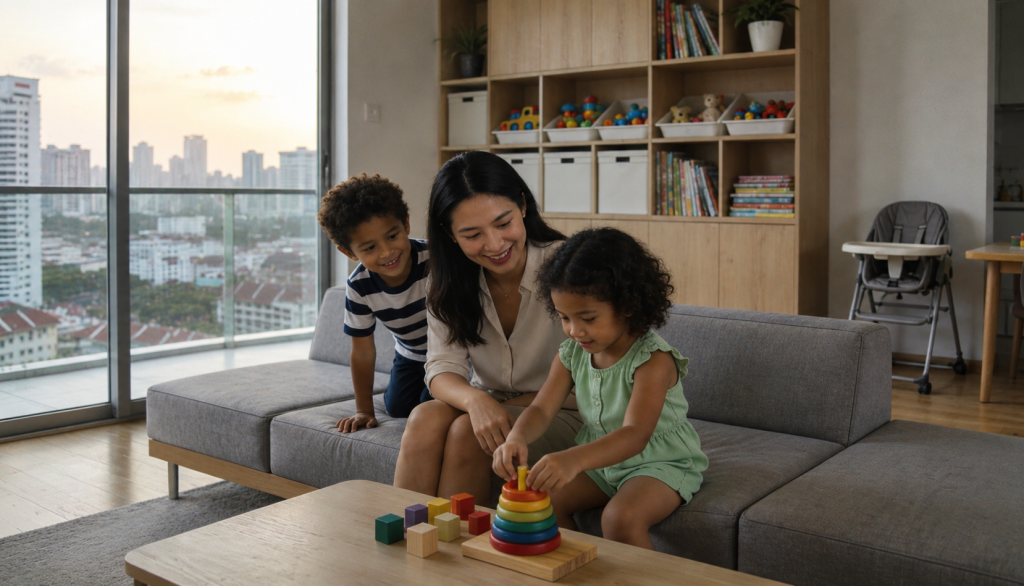
You bought a sleek, two bedroom condominium unit in a lovely residential neighborhood in Singapore. You spent months meticulously picking out the perfect modular sofa, selecting minimalist track lighting, and keeping the quartz kitchen countertops entirely pristine. For a long time, it was your ultimate urban sanctuary. It was a place to unwind after a long corporate day in the Central Business District. Then, the routine prenatal ultrasound dropped a beautiful, life altering bombshell: you are expecting multiples.
Suddenly, that compact, carefully curated floor plan feels less like a modern design achievement and more like a high stakes geometric puzzle. The sudden realization that you need to fit two cribs, double the bulky gear, and an absolute avalanche of diapers into a typical Singaporean apartment can make even the most composed parents panic. How do you manage the impending domestic chaos without losing your personal style, your architectural layout, or your fundamental peace of mind?
Raising twins or triplets in a local condominium comes with clear spatial limitations. In high density urban environments, noise travels incredibly fast, physical privacy disappears early, and storage space is always at a premium. But we refuse to believe that expanding your family means surrendering your home aesthetic or living in a state of permanent clutter. You can absolutely raise happy, thriving multiples in a compact home. It simply takes strategic planning, smart design edits, deep intentionality, and a willingness to completely rethink how you use your daily square footage.
Redefining Your Space: Smart Edits Over Simply Doubling Up
When you automatically duplicate every single piece of baby gear on the market, your available floor area vanishes overnight. The trick to surviving this layout crunch isn’t immediately packing up and moving to an expensive landed property or a massive executive flat. Instead, it is about prioritizing visual economy, minimizing physical footprints, and aggressively claiming your vertical real estate.
Invest in Multi-Functional Furniture
Do not buy two of everything out of sheer habit or retail panic. Look for highly adaptable pieces that evolve alongside your children as their developmental needs shift.
For instance, look closely at convertible cribs. You want to choose low profile, wooden frames with clean lines that transform seamlessly into toddler beds later on. This single choice completely eliminates the stressful need to buy entirely new furniture sets in a few short years.
When it comes to the living room, focus heavily on concealed storage. Look for deep storage benches, hollow upholstered ottomans, and bed frames fitted with deep, built-in hydraulic drawers. We must establish a strict household rule: if a piece of furniture cannot actively hide toys, extra linens, or bulk wet wipes, it simply does not deserve a place in your home.
The same logic applies to mealtimes. Instead of bulky, permanent highchairs that block the dining path, pick premium, lightweight highchairs that collapse completely flat. You want items you can effortlessly tuck behind a bedroom door or slide inside the household bomb shelter the very moment the meal ends.
Think Vertically
When horizontal floor space is scarce, your only logical direction is upward. Floor to ceiling custom wardrobes require a higher upfront investment during a minor renovation, but the long term storage payoff is absolutely massive.
Use the highest, less accessible shelves for seasonal travel gear, winter clothing, and bulk diaper packs purchased during online sales. Keep the lower tiers highly accessible for daily outfits, swales, and toys.
Floating shelves are also a brilliant addition to an urban home. They allow you to display delicate decor, books, and personal items completely out of reach of curious toddlers while keeping your valuable floor space entirely clear for foot traffic.
The Myth of Duplication
Many first time parents assume twins require two identical sets of every single toy, play mat, and gadget. This assumption is a fast track to an unlivable home environment. Instead, create a strict, highly organized toy rotation system.
One child can practice tummy time on the play mat while the other child enjoys a session in the bouncer. A few hours later, they swap. This simple habit saves an incredible amount of physical real estate and teaches your children the essential social art of sharing from day one.
Furthermore, keep your color choices for baby gear neutral and cohesive. When your swings, mats, and storage bins match the existing wood tones or muted grays of your apartment, they visually blend into the background rather than dominating the entire room.
Managing the Acoustic Crisis: Handling Simultaneous Meltdowns
Every single parent on earth deals with toddler tantrums, but managing a synchronized meltdown inside a modern condo unit is a uniquely intense sensory experience. Modern local apartments are often built with polished porcelain tiles, large glass window panes, and engineered timber floors. These materials reflect sound waves with brutal efficiency. When both toddlers decide to lose their tempers at the exact same moment, a small living room can quickly feel like an overwhelming acoustic echo chamber.
Create Visual Distance
In a small apartment, you might not have separate wings or distant rooms to isolate crying children. You can, however, create immediate psychological space. When both children are escalating emotionally, your first goal is to break their direct line of sight. Toddlers feed off each other’s emotional energy very easily, creating a loop of distress.
Position one child near the safety glass windows of the balcony to look at the passing traffic or the clouds outside. At the same time, comfort the other child in a quiet, cozy reading corner on the complete opposite side of the living room. By separating them visually, you break the mirror effect and allow the emotional storm to clear much faster.
Control the Sensory Inputs
When a double meltdown occurs, your immediate human instinct might be to raise your voice to speak over the noise. You must resist this urge completely. Operating at a high volume only adds fuel to the fire.
Instead, consciously lower your voice to a quiet, rhythmic whisper. Walk around the room and dim the bright overhead downlights. Turn off any background television shows, podcast audio, or upbeat music. By rapidly lowering the total sensory input of the physical room, you provide a calm environment that helps their overstimulated nervous systems settle down.
The Silent Tag-Team Method
Co-parenting in close quarters means you, your partner, and your helper are always in each other’s physical space. This lack of friction requires excellent teamwork. Establish a clear, silent hand signaling system with your spouse.
When one adult feels their internal patience wearing thin, the other steps in smoothly to take over the situation without a lengthy discussion or argument. Accepting that big emotional outbursts are a completely normal part of childhood development keeps the home atmosphere stable for everyone involved.
Cultivating Individuality in Close Quarters
The biggest psychological challenge when raising multiples in a compact home is helping each individual child build a distinct identity. When they share a bedroom, use the same play area, and follow the exact same daily schedule, it is very easy to accidentally treat them as a single package deal. Avoiding this collective mindset requires real, daily intentionality.
Establish Micro-Zones
Even within a shared bedroom space, you must give each child their own distinct territory. This does not require putting up physical walls or dividing curtains. It can be achieved easily with small, thoughtful design touches.
Give them color-coded storage bins for their personal treasures, toys, and special comfort blankets. Allocate individual drawers in a shared chest of drawers that belong exclusively to them, giving them complete ownership over that small space.
You can also install separate bedside clip-on reading lights that match their personal style or preferred brightness level. These small, clear boundaries teach your children that their personal preferences are deeply valued, even if they happen to share a bedroom wall.
The Milestone Challenge: Celebrating Differences
This critical need for individual recognition becomes incredibly apparent during major developmental milestones like birthdays. It is highly tempting for busy parents to host one massive, generic party to save time, money, and personal energy. However, as your multiples grow, you will quickly realize they might have completely opposite interests. One twin might love mechanical trains and building blocks, while the other is completely captivated by painting and music.
You can easily respect both of their unique worlds without renting an incredibly expensive external commercial venue. Host a small, stylish gathering right in your condominium function room.
When it comes to the food, instead of ordering two massive cakes that will completely overwhelm your small kitchen fridge, source the best cakes in Singapore from a talented local baker who can skillfully customize two entirely distinct halves on a single tier. This clever compromise honors their individual tastes perfectly, satisfies your adult guests, keeps your food budget intact, and prevents your kitchen counters from being overrun by leftovers.
The Condo Advantage: Extending Your Living Room
When the walls of your private unit start closing in during a long weekend, look directly outside your front door. One of the greatest perks of modern Singapore condo living is the extensive, built-in network of residential amenities. You should treat these shared estate spaces as a direct, fee-free extension of your private square footage.
The Afternoon Sanity Escape
When the dreaded afternoon restlessness arrives, change your physical environment immediately. Gather the kids, load up the double stroller, and head downstairs to explore the estate grounds.
Make full use of the wading pool. Water play is an incredible, natural tool for early childhood emotional regulation. The physical effort of splashing around safely under your supervision drains their excess physical energy, which directly ensures a much smoother, faster bedtime routine later that evening.
On rainy days, look into booking the estate function room. This gives your children a large, dry, and safe area to run around, practice walking, or build large block towers without cluttering your main living room floor or disturbing your immediate downstairs neighbors.
You can also use the open, breezy sky terraces for a quiet afternoon story time session. The fresh air, gentle breeze, and change of scenery can shift everyone’s mood instantly, transforming a stressful day into a peaceful one. By systematically incorporating these shared common areas into your daily family schedule, you effectively double your usable living space without adding a single cent to your monthly mortgage.
Embracing the Micro-Family Lifestyle
Raising multiples in an urban apartment is never a compromise on the quality of their childhood. If anything, it actively fast-tracks essential life skills that will serve them well into adulthood. Children raised in closer quarters learn to share without constant prompting, adapt quickly to communal schedules, and form an incredibly tight, unbreakable sibling bond from sharing a cozy home.
Your physical home size does not dictate the quality, warmth, or success of your parenting journey. With smart furniture choices, calm emotional management strategies, and full use of your residential estate facilities, you can easily curate a beautiful, highly functional sanctuary for your expanding family.
We would love to learn about your personal experiences now. What is your top space-saving tip, favorite hidden storage hack, or organization trick for managing a busy household in the city? Please share your thoughts and stories in the comments section below so we can keep supporting each other on this rewarding urban parenting journey.